Scuba diving in Punta Cana, written for people who have never dived: the $199 first-timer experience and the $490 three-day certification compared, what the dive actually involves, and what gets sold as diving here that is not diving.
What You Should Know
- Two bookable options, both built for beginners: a 3.5-hour first-time dive at $199 with pool practice and a guided reef dive, and a three-day Open Water certification course at $490.
- No experience is needed for either, and neither requires you to already be certified. The first-timer dive stays shallow, around 20 feet, with a guide rope to hold the whole way down.
- Minimum ages differ by product and one listing contradicts itself. The course takes children from 10; the first-timer dive publishes 12 in one field and 10 in another, so confirm before booking.
- Leave 18 hours between your last dive and your flight home. That rule rules out diving on your final full day for most travelers, so book it early in the trip.
Scuba Diving in Punta Cana for Beginners
Scuba diving in Punta Cana starts at $199 for a first-time dive with no experience required, or $490 for a three-day course that leaves you certified to dive anywhere in the world. Both are built for people who have never breathed underwater, which is fortunate, because the beginner end is where this destination's dive market genuinely is.
That is the honest framing, and it shapes everything below. When we went through every bookable activity in Punta Cana, we found exactly two real scuba products: one introductory dive and one certification course. There is no bookable two-tank boat dive for already-certified divers here. If you are a qualified diver looking for a reef trip, this page will tell you where to go instead, but it is not written for you. It is written for the much larger group who are curious about diving and want to try it on holiday.
It also matters that several things sold alongside diving in Punta Cana are not diving. The underwater scooter trips that dominate the search results are a different activity with a different experience and a markedly worse review record, and we cover what they actually are further down rather than quietly listing them as a dive option.
If you want to see the reef without the tank, our Punta Cana snorkeling guide compares those trips from $35, and they visit the same Cabeza de Toro reef. For a full day on the water, our catamaran guide and our Saona Island excursion guide cover the boat days. For diving against the rest of what this coast offers, our best things to do in Punta Cana guide compares the full range of activities.
SeaPro Divers: First Time Scuba Diving Experience
The only first-time dive in Punta Cana with a review base worth calling evidence: 164 reviews behind a 4.7, with 18 of them posted in the past year and the newest a month before we checked. The published inclusions are the most complete here, covering a professional instructor, all equipment, a pool training lesson, a PADI intro pamphlet, hotel pickup from selected hotels and the guided ocean dive itself, across about three and a half hours. Guests describe a genuinely gentle first dive: basics on land, practice in chest-deep water, then a descent along a rope to roughly twenty feet. Two caveats we would not bury. Six of those 164 reviews are one star, and one recent guest reports the pool session did not happen on their day, so treat it as advertised rather than guaranteed.
Book NowPunta Cana Scuba Options Compared
This is a short table, and that is the finding rather than a gap in our research. These are the only two scuba products bookable in Punta Cana. We have included the underwater scooter trip at the bottom for comparison only, clearly marked, because it is what most people searching for diving here actually end up looking at.
| Experience | Operator | Price | Viator Rating | Duration | Ages | Certified at the end? | Included | Best For |
|---|---|---|---|---|---|---|---|---|
| Top Pick First Time Scuba Diving Experience Check availability |
SeaPro Divers | $199 per person | ⭐ 4.7 (164 reviews) Read Reviews |
3.5 hrs | Listing states 12 to 70 in one field and a minimum of 10 in another | No | Instructor, equipment, pool training lesson, guided ocean dive, PADI intro pamphlet, hotel pickup from selected hotels | Trying diving once, with no commitment |
| 3 Days Open Water Diving Course Check availability |
Grand Bay Of The Sea | $490 per person | ⭐ 5.0 (8 reviews) Read Reviews |
3 days | 10 and over | Yes, Open Water certification | Dive equipment, transportation, certification | Leaving with a qualification that works worldwide |
| Scuba Doo Underwater Scooter Not scuba diving, listed for comparison |
Pleasant Tours | $75 per person | ⭐ 3.8 (114 reviews) | 3.5 hrs | 8 and over | No | Scooter session, glass-bottom boat, snorkel gear, drinks, transport from Bavaro and Los Corales | Read the section below before booking |
ℹ️ All products and information were verified by our team against the operators' live listings on October 13, 2026. Prices and availability change often, so always confirm before booking. The Scuba Doo row is an underwater scooter, not scuba diving, and is shown for comparison only: it has no booking link on this page. A third dive product, a Catalina Island trip from Bavaro, was excluded because its newest review is over nine months old and it holds a 3.2 rating.
What a First Dive in Punta Cana Actually Involves
- 01Pickup
Hotel collection, from selected hotels
Pickup is included from selected hotels rather than all of them, so confirm yours is on the list. Guests outside the standard area describe the operator agreeing to collect them anyway when asked in advance.
- 02On land
The briefing and the basics
You are taught the essentials on land first: how the regulator works, how to clear a mask, the hand signals, and what not to do. No prior knowledge is assumed and you do not need to be a strong swimmer.
- 03Shallow water
Practice standing up
The next step is chest-deep water where you can stand, breathing through the regulator until it feels normal. The listing describes this as a pool training lesson; guest accounts describe it happening in shallow sea, and one recent review says it did not happen at all.
- 04The descent
Down the rope, roughly twenty feet
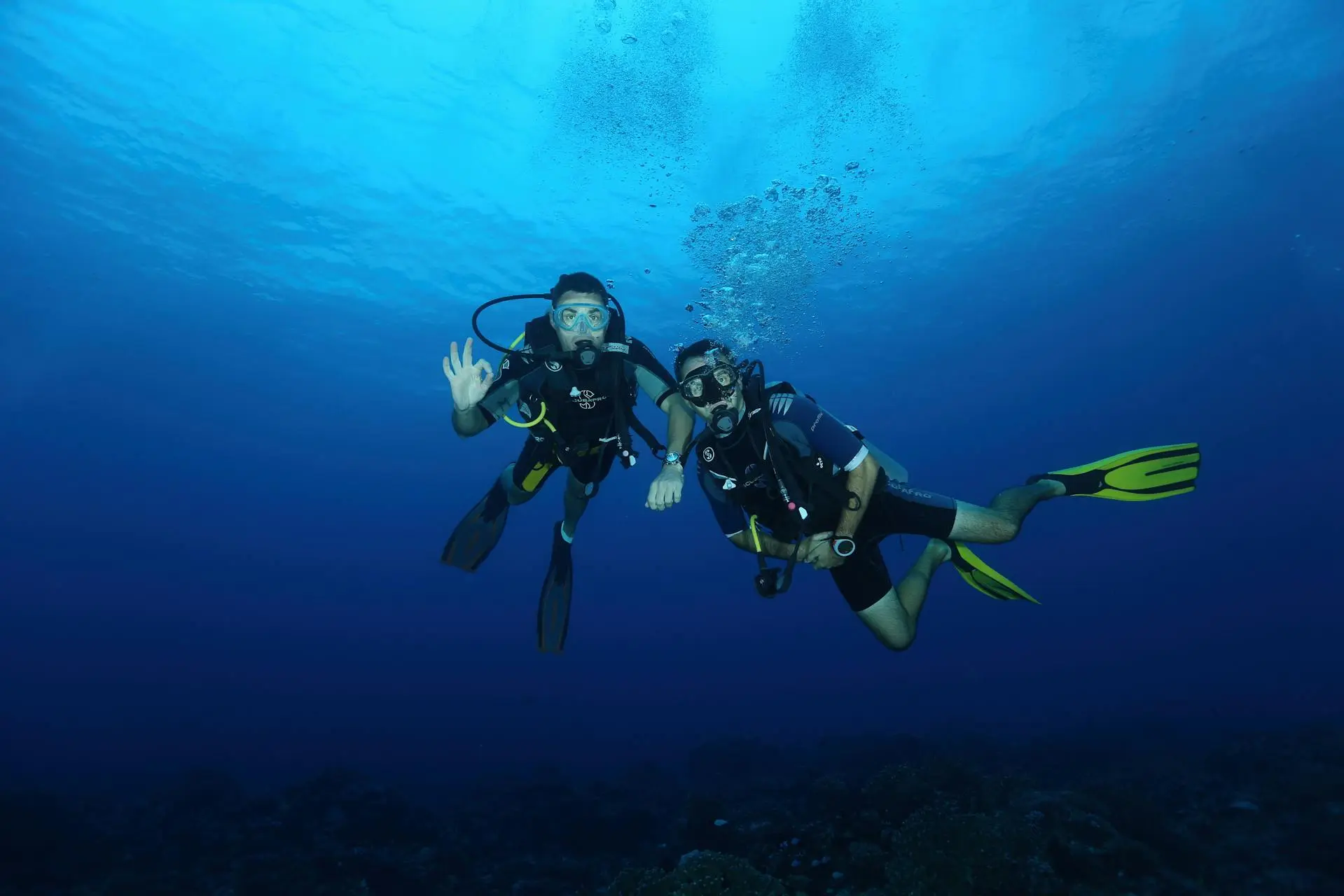
The dive itself follows a rope down to about twenty feet, with the instructor alongside. Guests consistently describe the rope as the thing that makes it manageable, and the depth as shallow enough that a panicked ascent would not hurt you.
- 05The reef
Following the guide along the reef
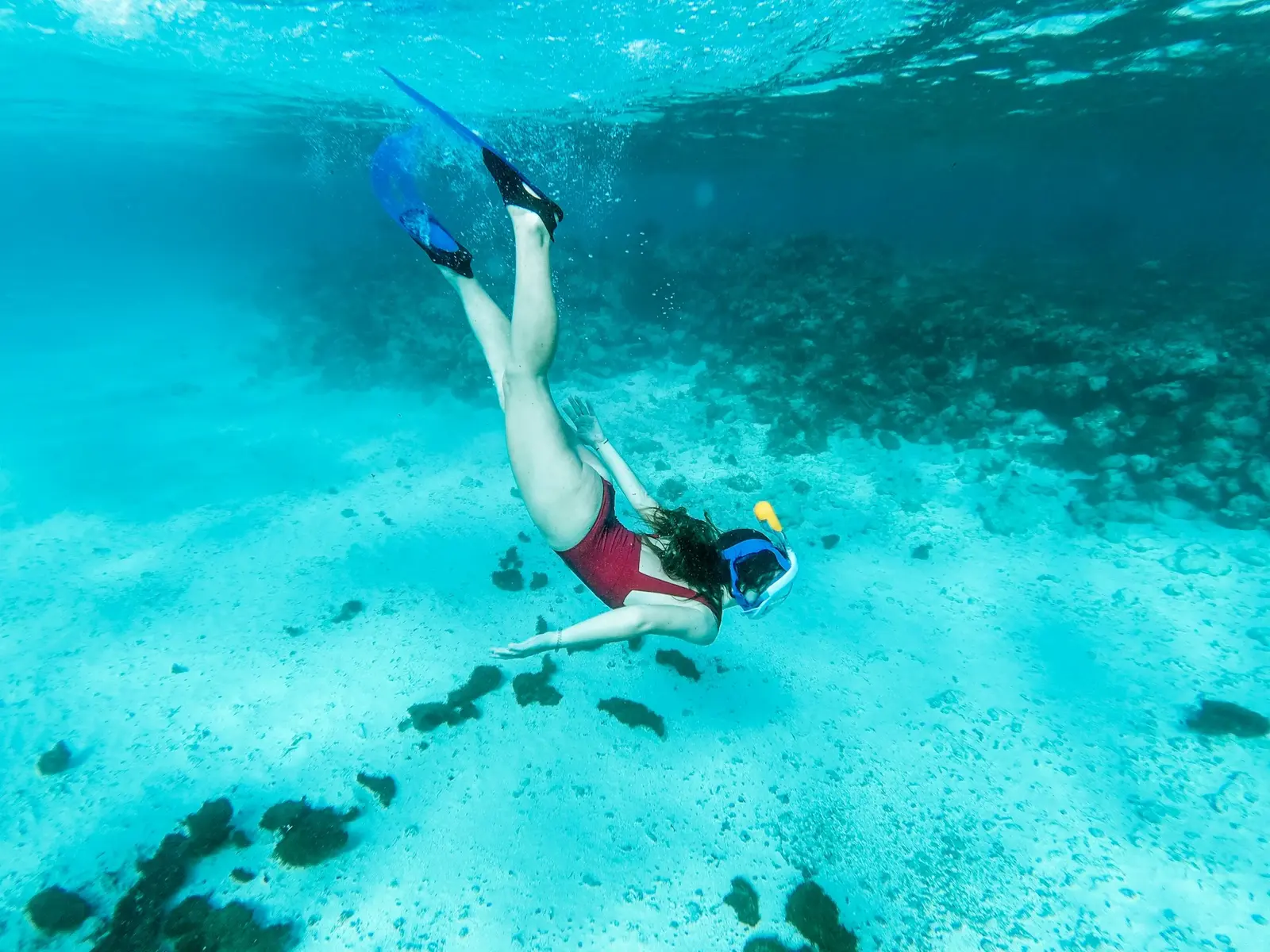
You follow a set path beside and through the reef rather than roaming. Expect reef fish rather than big pelagics. This is the Cabeza de Toro area, the same shallow protected reef the snorkeling boats use.
- 06After
Back ashore, and the 18-hour rule
Total time is about three and a half hours door to door. The one hard constraint afterwards is flying: the operator requires 18 hours between your last dive and take-off, so this cannot be your last-day activity.
- 01
Hotel collection, from selected hotels
Pickup is included from selected hotels rather than all of them, so confirm yours is on the list. Guests outside the standard area describe the operator agreeing to collect them anyway when asked in advance.
Pickup - On land02
The briefing and the basics
You are taught the essentials on land first: how the regulator works, how to clear a mask, the hand signals, and what not to do. No prior knowledge is assumed and you do not need to be a strong swimmer.
- 03
Practice standing up
The next step is chest-deep water where you can stand, breathing through the regulator until it feels normal. The listing describes this as a pool training lesson; guest accounts describe it happening in shallow sea, and one recent review says it did not happen at all.
Shallow water - The descent04
Down the rope, roughly twenty feet
The dive itself follows a rope down to about twenty feet, with the instructor alongside. Guests consistently describe the rope as the thing that makes it manageable, and the depth as shallow enough that a panicked ascent would not hurt you.
- 05
Following the guide along the reef
You follow a set path beside and through the reef rather than roaming. Expect reef fish rather than big pelagics. This is the Cabeza de Toro area, the same shallow protected reef the snorkeling boats use.
The reef - After06
Back ashore, and the 18-hour rule
Total time is about three and a half hours door to door. The one hard constraint afterwards is flying: the operator requires 18 hours between your last dive and take-off, so this cannot be your last-day activity.
Nothing about the first-timer dive is technical, and that is the point. The depth, the rope and the instructor ratio are all set up so that someone who has never used a regulator can get through it. What follows is what the reports add that the listing does not say.
What travelers report (the pool lesson is not guaranteed): The listing includes a pool training lesson, and most accounts describe some form of shallow-water practice before the dive. But one guest reviewing in September 2026 booked expecting to start in a pool and learn the basics before the ocean, and says that did not happen; on a choppy day they went more or less straight in. If the staged build-up is the reason you are booking, ask the operator to confirm it rather than relying on the inclusion list.
What travelers report (weather cancels these, sometimes late): Several accounts describe the dive being called off for sea conditions, in more than one case within an hour or two of the pickup time. That is the right decision on a beginner dive and we would rather an operator cancel than take nervous first-timers into chop. The practical consequence is that this is a poor thing to schedule tightly: book it early in your stay so a cancelled day can be moved rather than lost.
Our take (do not book this on your last full day): The 18-hour gap between diving and flying is a standard safety rule, not an operator quirk, and it quietly removes the final day of most trips from consideration. Combine that with the chance of a weather cancellation and the sensible slot is the first half of your holiday, where there is still room to reschedule.
First Dive or Full Course: Which Should You Book?
The two products answer different questions. One asks whether you like diving. The other assumes you already know and want the qualification.
| If you are... | We'd book | Why |
|---|---|---|
| Curious, but not sure you will like it | SeaPro first-time dive | $199 and half a morning to find out, with a guide rope and about twenty feet of depth. No commitment beyond the day |
| Fairly sure you want to dive properly | 3-day Open Water course | $490 leaves you certified for life and able to dive anywhere. Two first-timer dives would already cost $398 and leave you with nothing |
| Travelling with a child aged 10 or 11 | The course, after confirming | The course publishes a minimum age of 10. The first-timer dive gives two different minimums in its own listing, so confirm in writing first |
| Here for three days or fewer | SeaPro first-time dive | The course needs three days, and you also need 18 hours between your last dive and your flight. On a short trip the maths rarely works |
| Nervous about being underwater | SeaPro first-time dive | Guests describe land basics, then chest-deep practice, then a roped descent. Several say the instructor's patience is what got them through it |
| Already a certified diver | Neither, realistically | Nothing bookable here is a certified-diver boat dive. See the section below on where qualified divers actually go |
| Just wanting to see fish without a tank | A snorkeling trip | Our snorkeling guide compares trips from $35 to the same Cabeza de Toro reef, at a fraction of the price |
The Two Scuba Options, Ranked
There are only two, so this is less a ranking than a straight account of what each one is, what the evidence behind it looks like, and where each falls short.
SeaPro Divers, First Time Scuba Diving Experience
$199 for about three and a half hours, and the only Punta Cana dive with a review base deep enough to judge: 164 reviews at 4.7, 18 of them from the past year. The published inclusions cover a professional instructor, all equipment, a pool training lesson, hotel pickup from selected hotels and the guided ocean dive. What guests describe is a carefully staged introduction: the basics on land, practice standing in chest-deep water, then a descent along a rope to around twenty feet, shallow enough that a panicked bolt to the surface is not dangerous. Two things we would weigh. Six of the 164 reviews are one star, which is a higher proportion than the headline suggests, and one recent guest reports the pool session simply did not happen on their day. Weather cancellations also come up, sometimes called an hour before pickup.
Check availabilityGrand Bay Of The Sea, 3 Days Open Water Diving Course
$490 across three days, ending with a PADI Open Water certification that is valid for life and recognised worldwide. Equipment, transportation and the certification itself are included, and it takes children from 10, which is a lower minimum than the first-timer dive publishes. The per-dive economics are better than they look: two separate first-timer experiences would run $398 and leave you with no qualification at all. The honest caveat is the evidence base. It holds a perfect 5.0, but across only eight reviews, three of them from the past year. That is not a bad sign, it is simply a small sample, and it is why it is not our top pick despite the higher rating. If you book it, you are backing the format more than a proven track record.
Check availabilityIf you think you might dive more than once on this trip, the course is already the cheaper option by the second dive, and it is the only one that leaves you with something afterwards.
How Much Does Scuba Diving in Punta Cana Cost?
A first dive costs $199 per person and a three-day Open Water certification costs $490 per person. Both include equipment and instruction, so there is no kit to rent on top. Those are the only two scuba prices in Punta Cana, which makes this an unusually short price breakdown, and it is worth saying plainly that $199 is at the expensive end for an introductory dive in the Caribbean.
The first-timer dive
Per person, for about three and a half hours including a guided reef dive, all equipment, an instructor and hotel pickup from selected hotels. No experience and no certification needed. You leave with the experience and a PADI intro pamphlet, but no qualification, so a second dive later in the week costs the same again.
Three-day Open Water course
Per person, across three days, including equipment, transportation and the certification itself. The break-even against the first-timer dive arrives fast: two introductory dives cost $398 and leave you with nothing, while the course leaves you qualified to dive anywhere in the world for life. Takes children from 10.
The underwater scooter
Per person for the Scuba Doo trip, which is frequently mistaken for diving and is not. It is cheaper than a real dive for a reason: the time actually underwater is a fraction of it. Read the section below before treating this as the budget option, because the review record is the weakest of anything on this page.
There is no equipment to rent on top of either scuba price, and no certification fee hidden behind the course price. Gratuities are not included on any of them.
Scuba Doo: What It Is, and What It Is Not
Search for diving in Punta Cana and the results fill up with Scuba Doo trips. They are cheaper than a real dive, they appear under the same keywords, and four separate versions of them are on sale. Enough people book them expecting scuba that the distinction is worth setting out properly.
What it actually is: an underwater scooter with a clear helmet that keeps your head dry, used on a short session from a floating platform. You do not wear a tank, you do not breathe through a regulator, and no instruction or certification is involved. The published package also includes a glass-bottom boat ride, snorkel gear, drinks and transport from the Bavaro and Los Corales areas.
What travelers report, and it is a consistent pattern: three things come up again and again across its 114 reviews. The first is that you do not drive the scooter: a diver moves it for you, which multiple guests describe as the opposite of what the listing led them to expect. The second is that the time underwater is short, with guests reporting roughly seven to fifteen minutes, sometimes less than advertised. The third is the transfer: several describe two to four hours in a shared van, in one case four, to reach a session measured in minutes.
The review record is genuinely poor. It holds a 3.8, but that average hides the shape: 20 of its 114 reviews are one star, close to one in six. Recurring complaints include a glass-bottom boat described as scratched, dirty or leaking, a photo package sold at the end, dolphins viewed in a pen rather than in open water, and cancellations where refunds were slow or disputed. There is also a practical warning worth repeating: several guests note the helmet is a poor fit for anyone claustrophobic.
What it is good for: there are genuinely happy reviews, and 62 of the 114 are five star. Guests who enjoyed it describe it as a novelty that got a non-swimmer or a nervous child underwater to see fish, with patient staff on the platform. If that is what you want, book it knowing that is what it is.
Our take (this is not the budget version of a dive): At $75 against $199 it reads like the cheap way to try diving, and it is not a version of diving at all. If the appeal is seeing the reef cheaply, a snorkeling trip costs less, puts you in the water longer and has a far better review record. If the appeal is breathing underwater, only the scuba products do that. The scooter sits in a category of its own, and the people who come back disappointed are almost always the ones who booked it as diving.
If You Are Already a Certified Diver
This page is written for beginners because that is what Punta Cana sells. If you are already qualified, the honest answer is that you will not find what you want on the booking platforms here, and it is better to say so than to point you at a beginner dive.
What we found: no bookable two-tank boat dive for certified divers in Punta Cana. The one certified-diver trip we located, a full-day Catalina Island tour from Bavaro, was excluded from this guide on two independent grounds: its newest review is more than nine months old, and it carries a 3.2 rating.
Where the diving actually is: the consensus across dive-specific sources is that the Dominican Republic's better diving sits south of here, around Bayahibe, roughly an hour down the coast. Published counts put Bayahibe at over 25 dive sites against around 15 near Punta Cana, and it is the base for the wreck diving the country is known for, including the St. George, as well as the wall dives at Catalina Island. Treat the site counts as guidance rather than gospel: they come from dive blogs and operator pages rather than an authority.
How to book it: direct with a Bayahibe dive shop rather than through a tour platform, which is precisely why those dives do not appear in our table. We compare only what we can verify with a public rating and review count, and the Bayahibe shops do not meet that bar. Sources also suggest southern dives cost more than local Punta Cana ones, so budget accordingly, and check recent reviews of any individual shop since opinions on the same operators vary.
If you are staying in Punta Cana and want to dive seriously, our guide to transfers from Punta Cana airport to La Romana covers the road south, since Bayahibe sits on that same stretch of coast.
Our Take
What we keep seeing in the reports is that almost everyone who comes away disappointed booked the wrong product rather than a bad one. The first-timer dive is excellent at being a first-timer dive, the course is good value if you will use it, and the underwater scooter is neither of those things. Work out which of the three you actually want before you compare prices, because they are not competing for the same person.
Tips for Diving in Punta Cana
- Book it in the first half of your trip. You need 18 hours between your last dive and your flight, which rules out the final day, and weather cancellations on beginner dives are common enough that you want room to reschedule rather than lose the activity.
- Confirm the minimum age in writing if you are close to it. The first-timer dive publishes 12 in one field of its own listing and a minimum of 10 in another. The course publishes 10. A family turned away at check-in over a two-year gap is an avoidable way to lose a morning.
- Do the maths on a second dive before you book the first. Two introductory dives cost $398 and leave you with no qualification. The three-day course costs $490 and leaves you certified for life. If there is any chance you will dive again, the course is already close to the better buy.
- Ask whether the pool session is running on your day. It is in the published inclusions, and most guests describe some shallow-water practice, but one recent report says it was skipped. If the staged build-up is why you chose this over jumping straight in, confirm it.
- Do not book the underwater scooter expecting to dive. No tank, no regulator, you do not steer it yourself, and the time underwater is measured in minutes. It is a novelty, not a cheaper dive.
- Check your hotel is on the pickup list. Pickup is from selected hotels rather than all of them. Guests outside the usual area describe the operator agreeing to collect them when asked in advance, so it is worth asking rather than assuming.
- Expect reef fish, not big animals. The first dive follows a set path along a shallow protected reef at about twenty feet, the same stretch the snorkeling boats use. It is a good place to learn and a modest place to sightsee.
- Bring cash for tips. Gratuities are excluded on every product here, and instructors on a beginner dive do a lot of hands-on work for nervous first-timers.
- If you are a confident swimmer wanting more water time, compare snorkeling first. Our snorkeling guide covers trips from $35 to the same reef, with far longer in the water than a first dive gives you.
- Do not plan a dive around seeing the famous wrecks. Those are at Bayahibe, an hour south, booked direct with dive shops, and they require certification. Nothing bookable in Punta Cana goes there.
How We Selected These Options
We searched the full Viator catalogue for Punta Cana, the wider Dominican Republic and the La Romana area, and verified every operator name, rating, review count, duration, age band, inclusion list and price against the Viator Partner API on October 13, 2026, rather than reading them off listing pages.
The search result is itself the main finding. Across 2,950 bookable products in Punta Cana, exactly two are scuba diving. A further search of the 5,310 products listed under the Dominican Republic as a whole, and 336 under La Romana, added no usable third option. We are reporting that plainly rather than padding the table, because a six-row comparison here would have to be built from products that are not scuba.
One dive product was excluded on recency and rating together: a full-day Catalina Island trip from Bavaro whose newest review is more than nine months old and which holds a 3.2. Four underwater-scooter products were excluded from the scuba comparison because they are not scuba; the most-reviewed of them appears in the table marked as such, without a booking link, because readers searching for diving encounter it constantly and deserve to know what it is.
We then read 232 guest reports across the three products, including every review of three stars and below, and weighted repeated patterns over individual accounts. That evidence shaped the page in two specific ways. It is why we describe the pool training lesson as advertised rather than guaranteed, after a recent guest reported it did not happen, and it is why the underwater scooter has its own section rather than a table row: the pattern of guests booking it as diving and being disappointed was too consistent to leave unexplained.
Where a listing contradicts itself we say so rather than picking a side, which is why the minimum age for the first-timer dive appears in this guide as two different published figures. Where the evidence base is small we say that too: the certification course holds a perfect rating across only eight reviews, and that is why it is not our top pick despite scoring higher than the one that is. We have not dived with these operators ourselves. Everything here is operator data we verified, guest reports we read and labelled as such, published reference material we cite, or our own arithmetic.
Frequently Asked Questions
How much does scuba diving in Punta Cana cost?+
A first-time dive costs $199 per person for about three and a half hours, including an instructor, all equipment, shallow-water training and a guided reef dive. A three-day Open Water certification course costs $490 per person including equipment, transportation and the certification. Both include kit, so there is nothing extra to rent. Those are the only two scuba prices in Punta Cana, and $199 is at the expensive end for an introductory dive in the Caribbean.
Can you scuba dive in Punta Cana without being certified?+
Yes, and that is what almost the entire local market is built around. The first-time dive requires no experience and no certification: you are taught the basics on land, practise in shallow water where you can stand, then follow a rope down to around twenty feet with an instructor alongside. If you want to come away qualified instead, the three-day Open Water course takes complete beginners and ends with a certification valid worldwide.
Is Punta Cana good for scuba diving?+
For a first dive, yes. For experienced divers, not especially. The local reef is shallow, protected and reliable for beginners, which is exactly what an introductory dive needs. But there is no bookable two-tank boat dive for certified divers here, and dive-specific sources consistently point qualified divers an hour south to Bayahibe, which has more sites, the wreck diving the country is known for, and the wall dives at Catalina Island.
What is the minimum age for scuba diving in Punta Cana?+
It depends on the product, and one listing contradicts itself. The three-day Open Water course publishes a minimum age of 10. The first-time dive gives an age band of 12 to 70 in one field of its listing and states a minimum of 10 in another. If your child is 10 or 11, confirm the age in writing with the operator before booking rather than relying on the listing.
How deep do you go on a first scuba dive in Punta Cana?+
About twenty feet, roughly six metres. Guests describe following a rope down past a shallow reef with the instructor alongside, which keeps the dive manageable for someone who has never used a regulator. One reviewer notes that it is deliberately shallow enough that a panicked ascent would not hurt you. Expect reef fish along a set path rather than open-water roaming.
Is Scuba Doo the same as scuba diving?+
No. Scuba Doo is an underwater scooter with a clear helmet that keeps your head dry. There is no tank, no regulator and no instruction, and guests report that a diver moves the scooter for you rather than you driving it. Time underwater is typically seven to fifteen minutes. It is a novelty rather than a cheaper dive, and its review record is the weakest of anything on this page, with 20 of its 114 reviews at one star.
How long before flying can you scuba dive in Punta Cana?+
The operator requires 18 hours between your last dive and take-off, which is a standard diving safety rule rather than a local quirk. In practice that removes your final full day from consideration. Combined with the chance of a weather cancellation on a beginner dive, the sensible plan is to book diving in the first half of your trip so a cancelled day can be rescheduled.
Should I do a first dive or the full Open Water course?+
Do the first dive if you are unsure whether you will enjoy diving: $199 and half a morning answers that with no commitment. Do the course if you are fairly confident you want to dive properly, because two introductory dives already cost $398 and leave you with no qualification, while $490 leaves you certified for life. The course does need three days, so it rarely works on a short trip.
Affiliate note: Some links on this page are affiliate links. If you book through them, we may earn a small commission at no additional cost to you.